Ask five 3D printing shops for a quote on the same file and you’ll get five different numbers — usually with no breakdown of why. At TAKT 3D we publish our rates because we think quote-gate is a bad customer experience. Here’s how pricing actually works, what you should expect to pay in 2026, and where the numbers come from.
A palm-sized prototype (about 20 cm³) in PLA lands on our $20 order minimum with standard 5-7 business day turnaround — as does the same part in PET-CF carbon fiber, because at that size the minimum dominates. Size is what separates materials: a 180 cm³ part quotes at about $25 in PLA and$66 in carbon-fiber nylon. Setup is a flat $5, and shipping anywhere in the US is from $15 UPS Ground — or free pickup in San Diego.
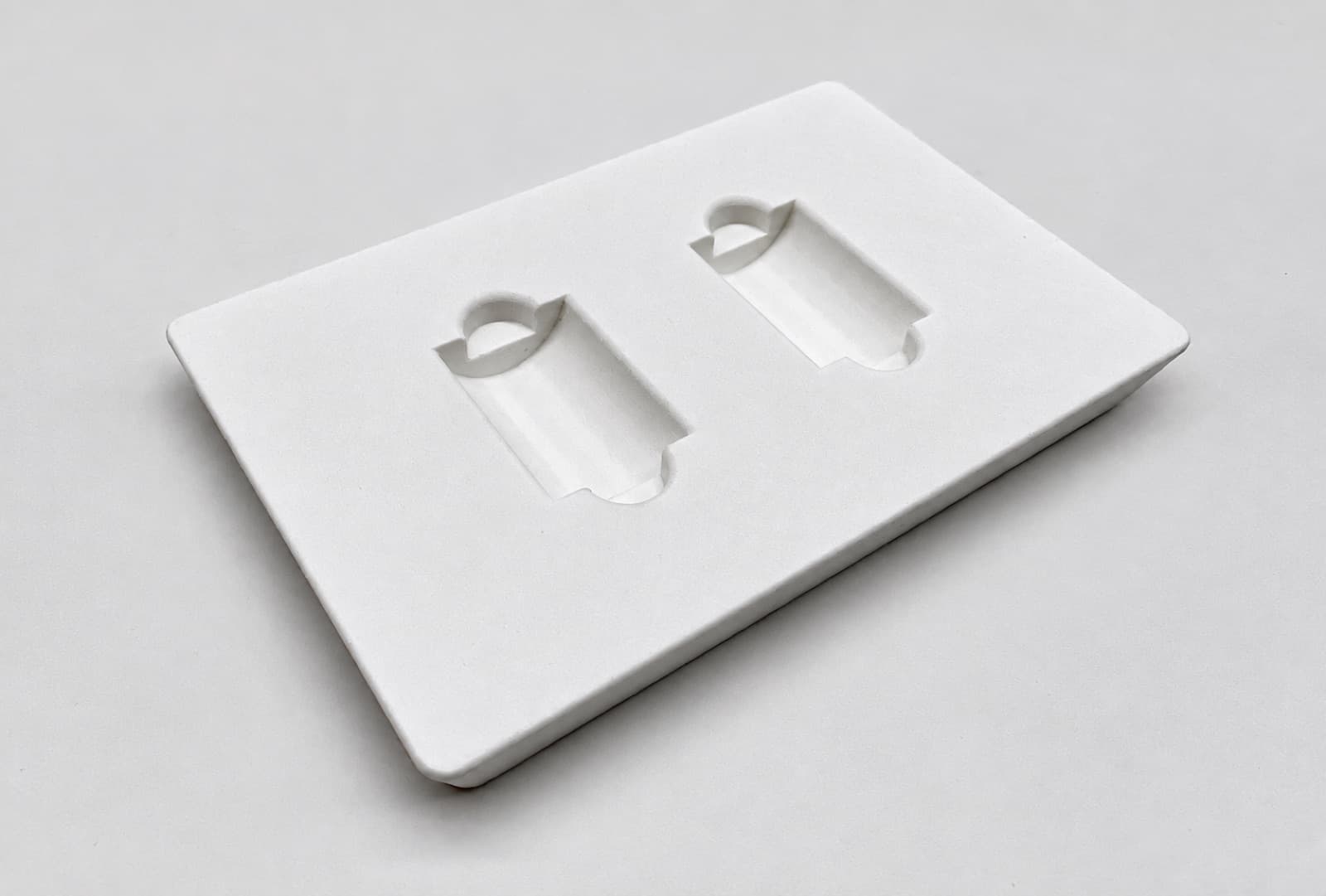
What actually goes into a 3D printing quote
Every honest FDM quote is a sum of four things: material volume, print time, setup, and post-processing. Shops that hide pricing usually hide it because one or more of those costs is unpredictable or marked up heavily. Ours aren’t, so we’ll walk through them.
1. Material volume ($/cm³)
Every 3D printed part has a measurable solid volume — the space the plastic actually fills after slicing. Our slicer reports it in cubic centimeters, and each material carries a per-cm³ rate. Read these as the material component of a quote, not the quote itself: machine time is priced on top, and on small parts the $20 order minimum is usually what you actually pay.
| Material | Rate ($/cm³) | Best for |
|---|---|---|
| PLA | $0.0350 | Prototypes, cosmetic parts, jigs |
| PETG | $0.0455 | Outdoor parts, chemical resistance |
| ABS | $0.0490 | Heat-resistant housings, machinable parts |
| TPU (flexible) | $0.0700 | Gaskets, grips, shock absorbers |
| PET-CF (carbon fiber) | $0.0700 | Structural brackets, drones, fixtures |
| PA6-CF (carbon fiber nylon) | $0.1225 | High-heat, load-bearing, end-use parts |
For a full material decision guide, see our PLA vs PETG vs ABS vs PET-CF comparison.
2. Print time (priced alongside material, not inside it)
Some shops bill machine hours as a separate line item. We don’t line-item it, but it is priced: the engine works out both a volumetric price and a machine-time price for your part and charges whichever is higher. You are never billed both. On most parts the machine-time side is the one that wins, which is why multiplying volume by the per-cm³ rate lands under your real quote.
3. Setup fee ($5 flat)
Every job has fixed overhead: slicing the file, loading filament, starting the print, inspecting the first layer. We charge $5 once per order — not per part. A 40-part run still only has one setup fee.
4. Post-processing (often $0)
Standard FDM parts come off the bed ready to ship after support removal. If you need sanding, vapor smoothing, tapped threads, or paint, we quote those separately — most parts don’t need any of it.
Three example quotes (real math)
Here are three common parts priced at our published rates. You can verify any of these by dropping the STL into our instant quote tool.
Example 1: Mini figurine (8 cm³, PLA)
- Parts: $2.98 each = $2.98
- Setup: $5.00
- Subtotal: $7.98 — below our $20 minimum
- Charged: $20.00 (minimum kicks in)
Small parts are where most shops quietly bill for a whole hour of machine time. We just have one honest minimum.
Example 2: Enclosure bracket (45 cm³, PETG)
- Parts: $8.77 each = $8.77
- Setup: $5.00
- Subtotal: $13.77 — below our $20 minimum
- Charged: $20.00 (minimum kicks in)
Still under the minimum — a single mid-size functional part usually is.
Example 3: Drone arms, batch of 4 (45 cm³ each, ×4, PA6-CF)
- Parts: $15.40 each × 4 = $61.59
- Setup: $5.00
- Charged: $66.59
Four parts in the strongest material we stock clears the minimum comfortably. The same four arms in PET-CF come to $44.42 — carbon fiber does not automatically mean expensive.
Those are the numbers the quote tool returns, not a simplified material-cost calculation — the per-cm³ rate above is the material component, and the engine also prices machine time, which depends on layer height, infill, and how much of the bed the part occupies. If you multiply volume by the rate you will land well under the real quote. Upload the file instead; it takes about ten seconds.
If a shop requires a call or a sales form before telling you the price, the price is almost always higher than someone who publishes openly. Our rates are the rates for every customer — hobbyist, Qualcomm engineer, or Scripps lab tech.
Why most 3D printing shops hide their pricing
Quote-gating isn’t a mystery. It exists for three reasons:
- Price discrimination. Hiding rates lets shops quote one price to a hobbyist and a different price to a company with a PO. Same file, same machine — different number.
- Markup flexibility. When material cost spikes, a hidden-price shop can raise quotes 40% without customers noticing. Published rates force honesty.
- Sales-funnel dependency. The form is a lead-capture tool. You submit, they email, they try to close. That process adds 1–3 days before you even have a number.
None of that serves you. Our rates are on the website. You can see the total before you check out. If we can’t print a file at that price, we tell you up front.
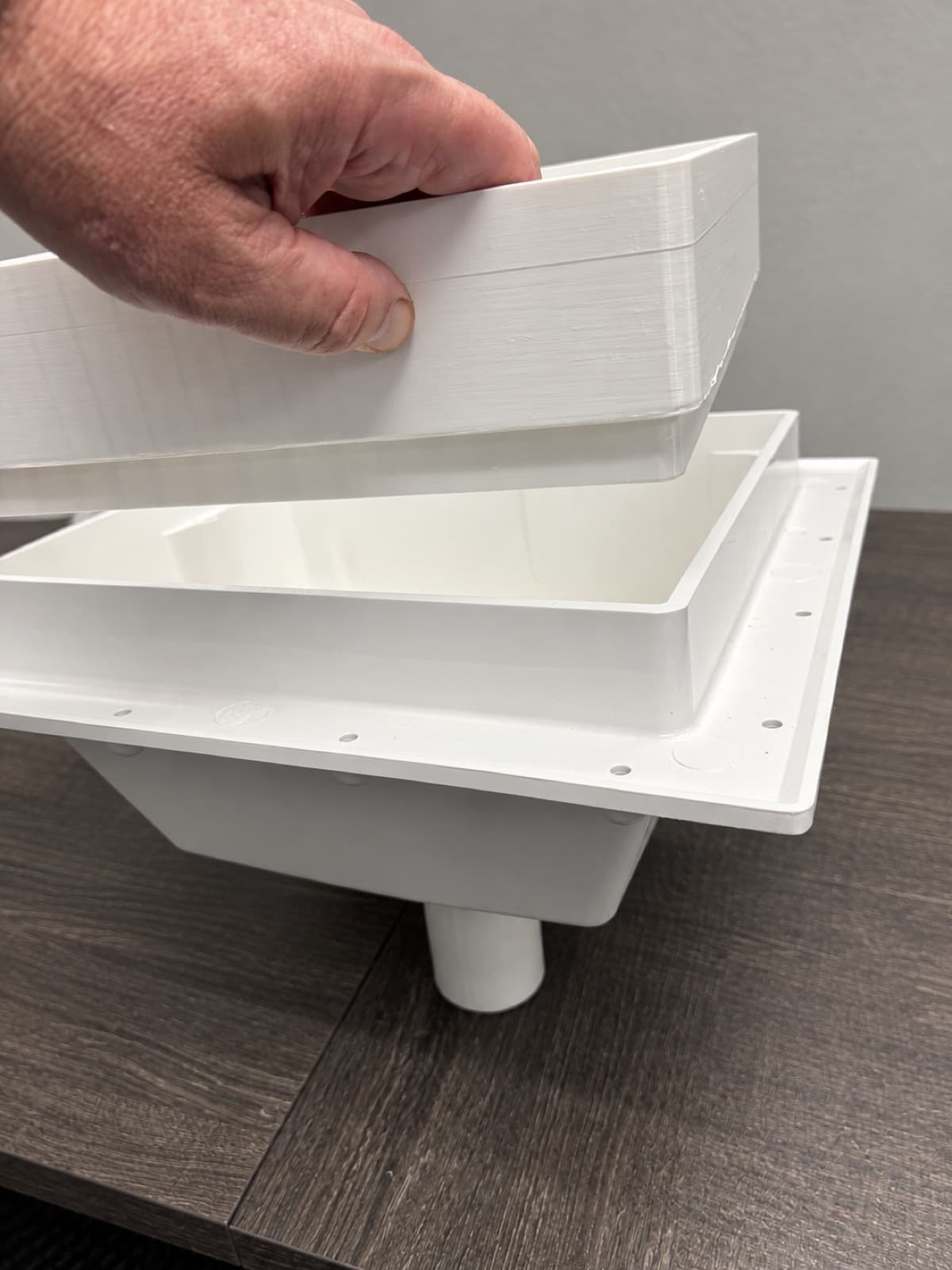
How much does 3D printing cost compared to other processes?
For a single prototype in engineering plastic, FDM is the cheapest option. Here’s an order-of-magnitude comparison for the same 50 cm³ bracket. To be explicit about where these come from: the FDM row is our own published pricing, and the other four are the ranges we have actually been quoted when we send work to partner shops. They are not survey data, and any specific shop may quote outside them.
| Process | Rough cost (one part) | Turnaround |
|---|---|---|
| FDM (our shop, PLA) | $20 (minimum) | 5–7 days (1–2 rush) |
| SLA (resin) | $40–$80 | 2–3 days |
| SLS (nylon powder) | $60–$150 | 3–7 days |
| CNC (aluminum) | $200–$500 | 1–2 weeks |
| Injection molded (low volume) | $15/part, $3,000+ tooling | 4–8 weeks |
If you need the smoothest finish or tightest tolerance, SLA or CNC may be right. FDM wins on strength per dollar at low volumes, and it is worth being precise about how much strength you actually give up: measured against injection-moulded ABS, FDM parts reached 65–72% of tensile strength and 80–90% of compressive strength (Ahn et al., 2002). You are not getting a moulded part, but for a bracket that needs to hold, two-thirds of moulded tensile at a fraction of the cost and none of the tooling is usually the right trade. See our FDM vs SLA guide for the deeper comparison.
Ways to reduce your 3D printing cost
Five easy wins that most customers don’t know about:
- Choose PLA when you can. Half the price of PET-CF and works for most prototype jobs. Upgrade materials only when you’ve identified a real failure mode.
- Batch your orders. Setup is once per order. Five parts ordered together share one $5 setup; five separate orders cost $25 in setup alone.
- Design for lower infill. A part that works at 20% infill costs much less than the same part at 80%. Most cosmetic parts don’t need more.
- Hollow out non-structural mass. Add shells or internal lightweighting pockets in CAD. Less material = lower price.
- Pick up locally. If you’re in San Diego, our neighborhood pickup saves the $15 shipping and a day.
Frequently asked pricing questions
What’s the minimum order?
$20 flat. That covers setup and the machine time for a small part. Below that, the math doesn’t work out for either of us.
Do you charge for support material?
No. Our $/cm³ rate is based on the solid part volume only. Supports and infill waste are built into the rate, not billed separately.
Is there a rush fee?
Rush turnaround (1–2 business days) is available at +60% (with a $60 minimum) when you need it. If the print is 24+ hours and you need it yesterday, we’ll let you know instead of quietly missing it.
Do you offer volume discounts?
Yes, and they start earlier than most people expect — 5% at 6 units, 12% at 26, 18% at 101, scaling to 40% at 5,000+. Upload your file and set the quantity in the quote tool to see the discount applied automatically.
What if the quote on your tool is wrong?
It almost never is — the slicer reports volume directly. But if something looks off (e.g., a hollow model reporting as solid), we’ll email you before charging and walk through why.
Bottom line on 2026 3D printing cost
For a single functional prototype in FDM, plan on $20–$60. For a batch of ten moderate-size parts, $75–$250. For a short production run of 100+, ask us for a per-unit rate — we have customers paying under $3/part for well-designed units.
The fastest way to get your number is to skip the estimate and just drop your STL in the quote tool. You’ll see the total before any email, no sales follow-up.
Sources
Claims on this page that are not about our own shop, pricing, or turnaround are attributed inline. Full references:
- Ahn, S.-H., Montero, M., Odell, D., Roundy, S. & Wright, P. K. "Anisotropic material properties of fused deposition modeling ABS." Rapid Prototyping Journal 8(4), 248–257 (2002). doi.org/10.1108/13552540210441166 — free full text (Peer-reviewed research)